From the emerald karst peaks of the South to the rainbow-colored ridges of the Northwest, China is home to some of the most diverse and ethereal landscapes on the planet. Beyond the bustling metropolises lie ancient forests and limestone spires that seem to defy gravity. If you are a nature lover or photography enthusiast, here is your essential guide to the six must-visit nature and wonders destinations.
1. Zhangjiajie – The Real-Life “Avatar” Mountains
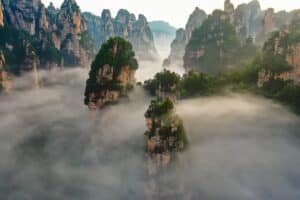
Located in Hunan Province, Zhangjiajie is the definition of a natural wonder, world-renowned for its thousands of towering quartz-sandstone pillars.
-
Nature Highlight: Wander through the “Floating Peaks”—3,000-foot spires shrouded in mist that famously inspired the Hallelujah Mountains in the movie Avatar.
-
Best Time to Visit: September to early November (Stable weather and stunning autumn colors).
-
Must-See Sites: Wulingyuan Scenic Area (Yuanjiajie & Tianzi Mountain), Tianmen Mountain, Zhangjiajie Grand Canyon Glass Bridge.
-
Recommended Stay: 3–4 Days.
-
How to Get There: Fly into Zhangjiajie Hehua International Airport (DYG) or take a high-speed train from Changsha (approx. 2–3 hours).
-
Master the Floating Peaks: From navigating the world’s tallest outdoor elevator to the best viewpoints for sunset photography, our comprehensive Zhangjiajie Nature Guide covers everything you need for a seamless mountain adventure.
2. Jiuzhaigou – The Fairyland of Multi-Colored Lakes
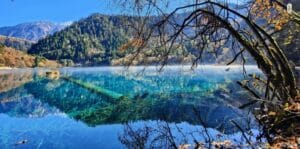
Nestled on the edge of the Tibetan Plateau, Jiuzhaigou is a UNESCO site famous for high-altitude lakes that shift between turquoise and deep blue.
-
Nature Highlight: Marvel at the crystal-clear “Haizi” (lakes) where calcium carbonate deposits preserve fallen ancient trees at the lake floor, visible through the shimmering water.
-
Best Time to Visit: Late October (The peak of the “Five-Color Forest” autumn foliage).
-
Must-See Sites: Five Flower Lake, Nuorilang Waterfall (widest calcified waterfall in China), Long Lake.
-
Recommended Stay: 2 Days.
-
How to Get There: Take the high-speed train from Chengdu to Huanglongjiuzhai Station (approx. 2 hours), followed by a 1.5-hour shuttle.
-
The Fairyland Survival Manual: Jiuzhaigou’s weather can be unpredictable. We’ve detailed the altitude preparation, shuttle logistics, and photography spots in our Jiuzhaigou Essential Guide to ensure you capture the perfect reflection.
3. Zhangye – The Burning Rainbow Mountains
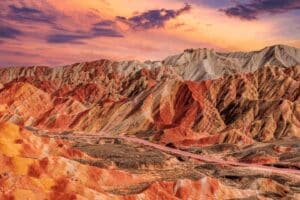
The Zhangye Danxia National Geological Park in Gansu Province is a geological masterpiece featuring vibrant, undulating ridges of red sandstone and minerals.
-
Nature Highlight: Witness the “Rainbow Mountains” at sunset, especially after a light rain when the minerals turn into a vivid, glowing oil painting.
-
Best Time to Visit: June to September (Colors are most vivid after summer rainfall).
-
Must-See Sites: Rainbow Danxia (Main Park), Binggou Danxia (unique rock formations), Pingshanhu Grand Canyon.
-
Recommended Stay: 1–2 Days.
-
How to Get There: Fly to Zhangye Ganzhou Airport (YZY) or take the high-speed train from Lanzhou (approx. 3 hours) or Xi’an (approx. 7 hours).
-
The Palette of the Earth: Understanding the geology behind the colors adds magic to the view. Dive into our Zhangye Geological Guide to learn about the best viewing platforms and nearby Silk Road historical stops.
4. Guilin & Yangshuo – The Masterpiece of Karst Landscapes
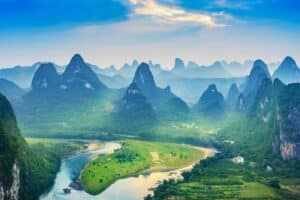
Guilin represents the quintessential “Chinese Ink Painting” aesthetic, where the Li River winds through a forest of limestone karst peaks.
-
Nature Highlight: Take a bamboo raft through the misty “Karst Forest” and watch the cormorant fishermen at dusk against a backdrop of serrated mountain silhouettes.
-
Best Time to Visit: April to October (May-June for the mystical “misty rain” vibe; September-October for clear skies).
-
Must-See Sites: Li River Cruise (the 20-RMB note view), Xianggong Hill (best bird’s-eye view), Longji Rice Terraces.
-
Recommended Stay: 3–4 Days.
-
How to Get There: Fly into Guilin Liangjiang Airport (KWL) or take a high-speed train to Guilin West or Yangshuo Station.
-
The Karst & River Bible: Which river section offers the best views? Our Guilin & Yangshuo Comparison Guide breaks down raft vs. cruise options, cycling routes, and how to find the quietest rice terrace villages.
5. Huangshan (Yellow Mountain) – The Sea of Clouds and Granite Peaks
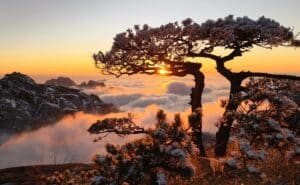
Huangshan is the most celebrated mountain in Chinese history, famous for its “Four Wonders”: peculiar pines, odd rocks, hot springs, and the “Sea of Clouds.”
-
Nature Highlight: Witness the “Sea of Clouds” from a granite peak at sunrise, where the mountain tops appear as islands in a white, moving ocean.
-
Best Time to Visit: March to May or September to November.
-
Must-See Sites: West Sea Grand Canyon (best for hikers), Bright Summit, UNESCO-listed Hongcun Ancient Village.
-
Recommended Stay: 2–3 Days (including an overnight stay on the summit).
-
How to Get There: Take a high-speed train to Huangshan North Station (approx. 2.5 hours from Shanghai).
-
The Peaks of Immortality: Hiking Huangshan requires strategy. Our Huangshan Climber’s Guide provides crucial tips on cable car routes, carrying gear, and choosing the right peak-top hotel for sunrise views.
6. Anshun – The Kingdom of Waterfalls and Karst Caves
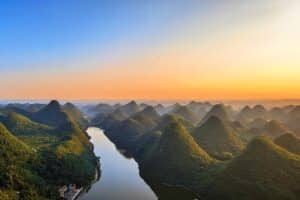
Anshun, located in Guizhou Province, is the “Water Capital” of China, housing massive subterranean wonders and the largest waterfall in East Asia.
-
Nature Highlight: Feel the thundering roar of the Huangguoshu Waterfall and walk through the “Water Curtain Cave” hidden directly behind the massive falling sheet of water.
-
Best Time to Visit: June to August (Peak water volume season).
-
Must-See Sites: Huangguoshu Waterfall, Dragon Palace (Longgong) underground boat ride, Getu River.
-
Recommended Stay: 2 Days.
-
How to Get There: Take a high-speed train to Anshun West Station (30 minutes from the provincial capital, Guiyang).
-
Gateway to the Underground: Anshun’s beauty lies both above and below ground. Our Anshun Water & Cave Guide provides tips on navigating the massive waterfall park and exploring the world-class karst cave systems.
🎉 Loved This Article? Don't Miss the Next One!
Subscribe to our newsletter and get exclusive content and the latest updates delivered straight to your inbox.