From the colossal city walls of the heartland to the desert caves of the Silk Road, China’s history is etched into the very landscapes of the country. For those seeking to walk through the corridors of time, here is your essential guide to the seven must-visit historic and heritage destinations.
1. Beijing – The Grandeur of Imperial China
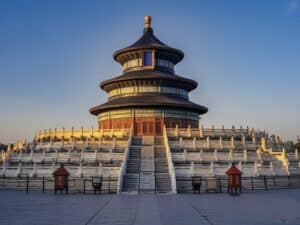
As the capital for the last three dynasties (Yuan, Ming, and Qing), Beijing represents the pinnacle of Chinese imperial heritage and ancient urban planning.
-
Heritage Highlight: Explore the “Central Axis,” a masterpiece of royal power, and walk the ancient stones of the Great Wall where it snakes across the mountain ridges.
-
Best Time to Visit: September to October (Autumn brings crisp air and golden ginkgo trees).
-
Must-See Sites: The Forbidden City, The Great Wall (Mutianyu or Jiankou), Temple of Heaven, Summer Palace.
-
Recommended Stay: 4–5 Days.
-
How to Get There: Fly into Beijing Capital (PEK) or Daxing (PKX), or take a high-speed train from any major city.
-
Master the Imperial Capital: From securing hard-to-get Forbidden City tickets to choosing the best Great Wall section for your fitness level, our comprehensive Beijing Heritage Guide covers everything for an epic royal journey.
2. Xi’an – The Cradle of Chinese Civilization
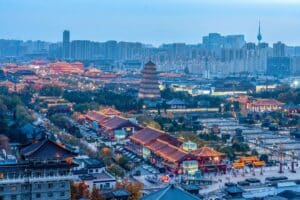
Formerly known as Chang’an, Xi’an served as the capital for 13 dynasties and marks the eastern starting point of the legendary Silk Road.
-
Heritage Highlight: Stand before the Terracotta Army, a silent limestone legion symbolizing the first unification of China under Emperor Qin Shi Huang.
-
Best Time to Visit: March to May or September to October.
-
Must-See Sites: The Terracotta Army (UNESCO), Ancient City Wall, Giant Wild Goose Pagoda, Shaanxi History Museum.
-
Recommended Stay: 3 Days.
-
How to Get There: Fly into Xi’an Xianyang Airport (XIY) or take a high-speed train (approx. 4.5 hours from Beijing).
-
The Ancient Capital Survival Manual: Navigating the sprawling museum crowds requires a plan. We’ve detailed the best entry times, cycling tips for the City Wall, and local food stops in our Xi’an Essential Guide.
3. Luoyang – The Center of Buddhist Art & Dynastic Might
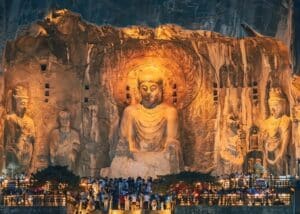
Luoyang rivals Xi’an in historical significance, having served as the center of gravity for the Northern Wei and the reign of China’s only female emperor, Wu Zetian.
-
Heritage Highlight: Marvel at the Longmen Grottoes, where tens of thousands of Buddhist statues are carved directly into the limestone cliffs along the Yi River.
-
Best Time to Visit: April (during the Peony Festival) or September.
-
Must-See Sites: Longmen Grottoes (UNESCO), White Horse Temple, Luoyang Museum.
-
Recommended Stay: 2 Days.
-
How to Get There: Take a high-speed train from Xi’an (approx. 1.5 hours) or Zhengzhou.
-
The Grottoes & Peonies Bible: Which grotto sections shouldn’t be missed? Our Luoyang Cultural Guide breaks down the artistic styles of different dynasties and the best spots to see the city’s famous peonies.
4. Pingyao – China’s Best-Preserved Han Ancient City
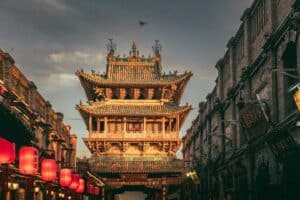 4. Pingyao – China’s Best-Preserved Han Ancient City
Pingyao is a living time capsule, entirely enclosed within its original Ming Dynasty walls and famous for being the financial heart of the Qing Dynasty.
-
Heritage Highlight: Step back into the 19th century as you visit the “Rishengchang,” the very first draft bank in China, within a city that has seen no modern skyscrapers.
-
Best Time to Visit: January to February (for Chinese New Year) or September.
-
Must-See Sites: Ancient City Walls, Rishengchang Exchange Shop, Wang’s Family Compound.
-
Recommended Stay: 2 Days.
-
How to Get There: Take a high-speed train to Pingyao Ancient City Station (approx. 3 hours from Beijing or Xi’an).
-
The Walled City Frontier: Staying inside the walls is an experience in itself. Dive into our Pingyao Heritage & Stay Guide to find the best courtyard boutique hotels and hidden alleyways.
5. Datong – The Northern Border’s Artistic Hub
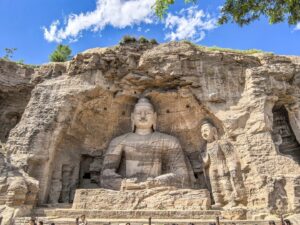
Datong was a strategic military outpost and the capital of the Northern Wei, where diverse cultures fused together at the edge of the nomadic steppe.
-
Heritage Highlight: Visit the Hanging Temple, an architectural marvel clinging to a vertical cliff, and the Yungang Grottoes, which showcase a unique blend of global artistic influences.
-
Best Time to Visit: May to September (ideal plateau weather).
-
Must-See Sites: Yungang Grottoes (UNESCO), Hanging Temple, Huayan Monastery.
-
Recommended Stay: 2 Days.
-
How to Get There: Take a high-speed train from Beijing (approx. 2 hours).
-
Art on the Edge: Datong offers a different vibe than central China. Our Datong Visitor’s Guide provides tips on avoiding the wind on the cliffs and understanding the Greco-Buddhist art of the grottoes.
6. Dunhuang – The Beacon of the Silk Road
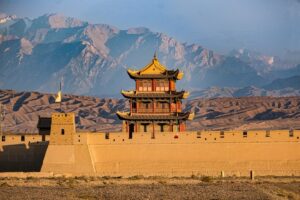
Situated at a cultural crossroads in the Gobi Desert, Dunhuang is an oasis that has protected a millennium of religious art within its cave temples.
-
Heritage Highlight: Experience the “Library on the Wall” at the Mogao Caves, containing the world’s finest collection of Buddhist murals spanning 1,000 years of history.
-
Best Time to Visit: May to October (avoid the peak heat of mid-summer).
-
Must-See Sites: Mogao Caves (UNESCO), Yumenguan Pass, Singing Sands Dune (Mingshashan).
-
Recommended Stay: 3 Days.
-
How to Get There: Fly into Dunhuang Airport (DNH) or take a high-speed train to Dunhuang Station.
-
The Silk Road Oasis Bible: Mogao Cave tickets are strictly limited. Our Dunhuang Reservation & Heritage Guide explains the booking system, digital displays, and how to survive the desert sun.
7. Qufu – The Holy City of Confucius
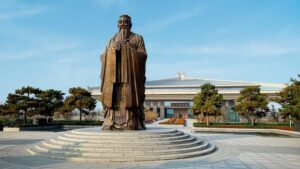
Qufu is the birthplace of Confucius, the philosopher whose teachings became the bedrock of Chinese social, ethical, and political life.
-
Heritage Highlight: Wander the “Three Kong” sites, featuring temple and mansion architecture so grand they were built to rival the imperial palaces of Beijing.
-
Best Time to Visit: September (for the Grand Ceremony Worshipping Confucius).
-
Must-See Sites: Temple of Confucius (Kong Miao), Cemetery of Confucius (Kong Lin), Kong Family Mansion.
-
Recommended Stay: 1–2 Days.
-
How to Get There: Take a high-speed train to Qufu East Station (approx. 2 hours from Beijing).
-
The Sage’s Legacy: Understanding Confucianism is key to understanding China. Our Qufu Cultural Guide provides crucial context on the rituals, the family lineage, and the architectural symbolism of the holy city.
🎉 Loved This Article? Don't Miss the Next One!
Subscribe to our newsletter and get exclusive content and the latest updates delivered straight to your inbox.